Tag: network security

  • DDoS Defence by Bottleneck: A Practical Guide for Websites and Game Servers

    DDoS Defence by Bottleneck: A Practical Guide for Websites and Game Servers

    Reviewed: 13 September 2026 · Next review: 13 December 2026
    Author: Ozlin Info Editorial Team · Human review: Lin (accountable human); Codex assisted

    A DDoS plan is only useful when it names the resource that is expected to fail first. “We have a firewall” does not answer whether an incident will fill the upstream link, exhaust packet forwarding, consume connection state, overload a query parser or make the application perform too much work.

    This guide offers a defensive planning model for public websites, Java multiplayer services and Valve-family dedicated-server queries. It avoids universal thresholds and packet recipes. The goal is to help owners ask better questions, place controls in the right part of the path and define a degraded mode before an incident.

    No single control guarantees availability. Capacity, provider routing, protocol support, application design and incident response all matter. Validate any design against your provider, software versions, traffic patterns and risk appetite.

    Start with the bottleneck, not the attack name

    Use more than one traffic measure. Each describes a different kind of pressure:

    MeasureWhat it representsTypical failure point
    bps / GbpsBits carried per secondInternet circuit, transit or scrubbing capacity
    pps / MppsPackets processed per second; Mpps means millions of packets per secondRouter, NIC, virtual switch, ACL or kernel packet path
    CPSNew connections per secondSYN handling, state tables, TLS handshakes or accept queues
    Concurrent connectionsConnections held open at onceMemory, descriptors, proxy workers or load-balancer state
    RPSHTTP requests per secondReverse proxy, application, cache or database
    QPSProtocol queries per secondDNS or game-query parsing and response work

    “Bpps” can mean billions of packets per second in some network discussions, but the notation is easy to confuse with bits per second. Write out the unit in procurement and incident records.

    Average packet size can be estimated for context as bits per second ÷ (8 × packets per second). For example, 100 Gbps divided by 100 million packets per second is about 125 bytes per packet. That is illustrative arithmetic, not an attack fingerprint or a sizing promise.

    Current Ray moves between four visual channels representing bandwidth, packet rate, connection pressure and request or query load.
    Different traffic measures reveal different bottlenecks; use shape, density and path behaviour as well as volume.

    Five useful pressure classes

    1. Volumetric pressure consumes link capacity. If the link is full before traffic reaches your server, a host firewall behind that link cannot restore the lost bandwidth. Mitigation must happen upstream, such as at the provider edge, an anycast network or a scrubbing service.
    2. Packet-rate pressure uses many small packets to exhaust packet handling before bandwidth looks full. Ask providers about packet rate as well as Gbps.
    3. Connection or state pressure targets new-connection handling or retained state. SYN defences, connection proxies and careful timeout policies help, but must be placed where they can still receive traffic.
    4. Protocol-query pressure repeatedly invokes a public protocol function, such as a status or server-browser query. It needs protocol-aware validation and budgets, not only generic port filtering.
    5. Application-resource pressure makes apparently valid requests consume CPU, database, cache, search, authentication or external-service capacity. This is commonly called application-layer or Layer 7 DDoS. “CC attack” is an informal term often used for HTTP request floods; it is not a standards-defined category.

    RFC 4732 explains why Internet denial-of-service defence is a system problem rather than a single appliance feature. BCP 38 / RFC 2827 and its update, RFC 3704, describe source-address filtering that can reduce spoofed traffic near its source. They do not stop attacks sent from valid source addresses.

    Websites: defend the whole request path

    A useful website pattern is:

    upstream or anycast edge → HTTP DDoS controls → validation and WAF → cache → reverse proxy → bounded application and queue → origin data stores

    • Upstream or edge capacity absorbs traffic before the origin link becomes the bottleneck.
    • Request validation and WAF rules reject traffic that violates known application behaviour.
    • Caching prevents repeated public reads from becoming repeated origin work.
    • Path-specific budgets recognise that a cached article, a login, a search and a large export have very different costs.
    • Queues and back-pressure keep a burst from turning into uncontrolled work.
    • Graceful degradation preserves essential pages while temporarily disabling expensive search, exports, previews or third-party calls.
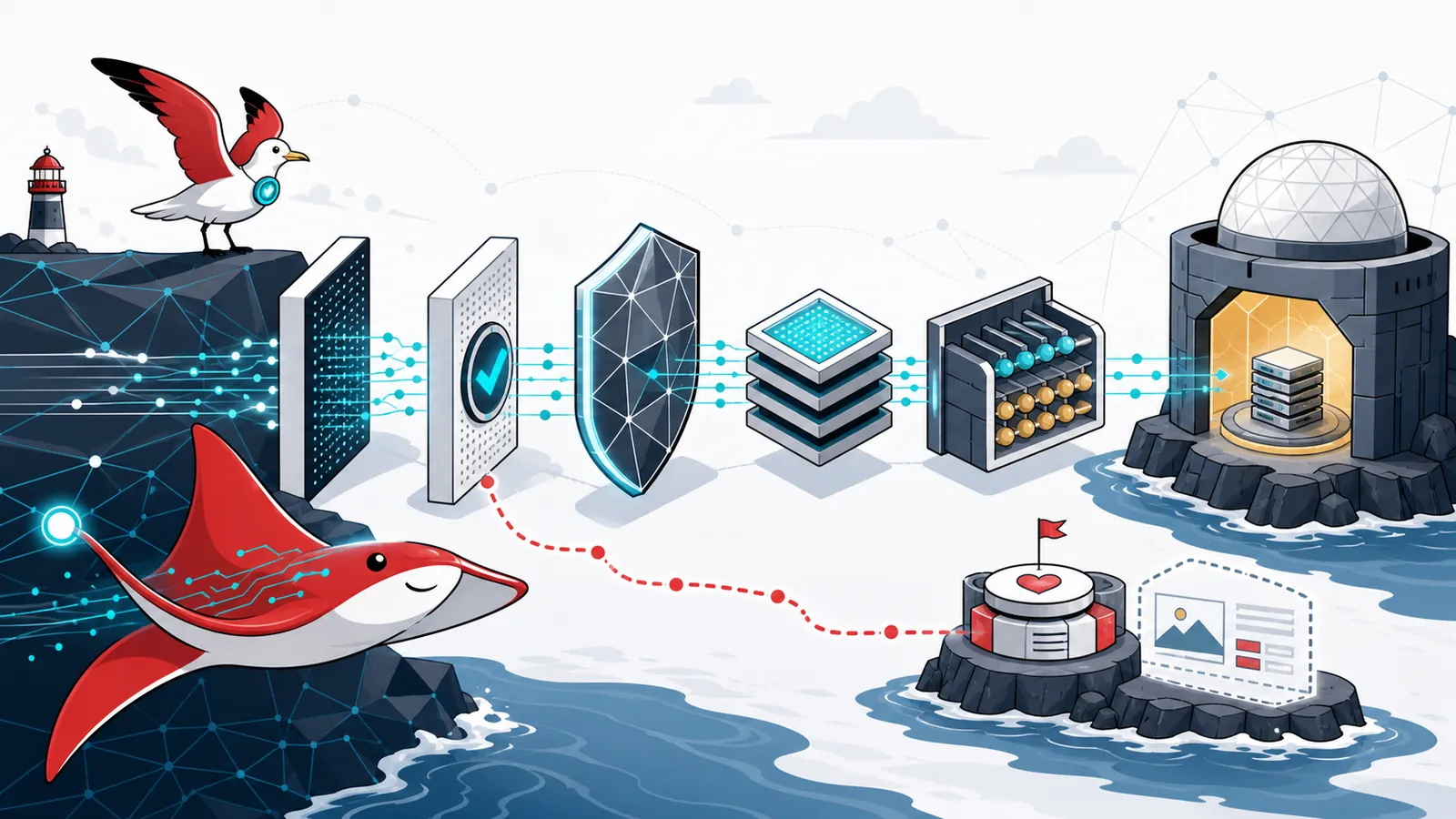
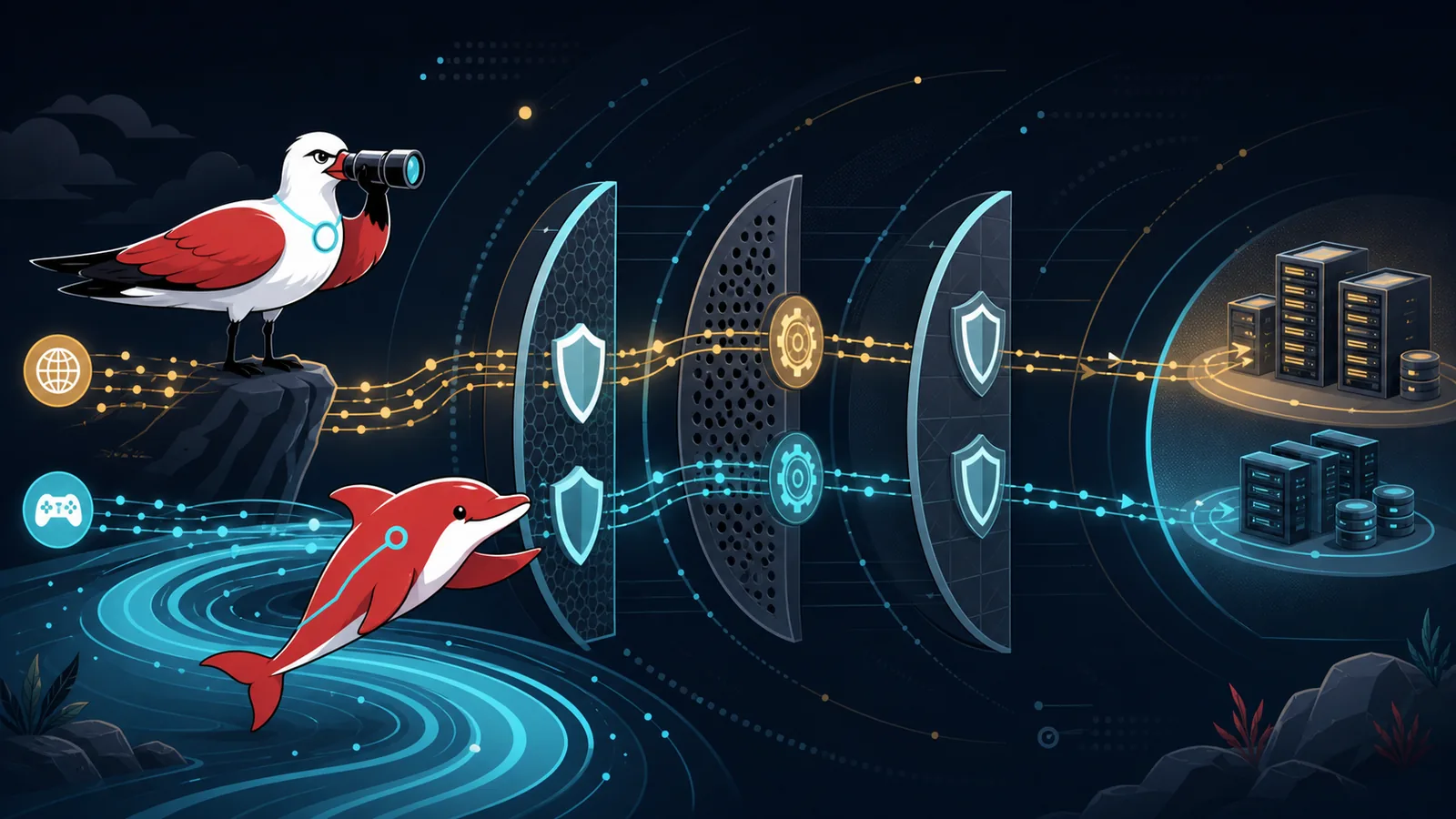
    Current Ray and Signal Gull guide website traffic through validation, a shield, cache, queue, protected origin and a separate degraded-service path.
    Website resilience depends on layers that reduce work before traffic reaches the origin.

    Conceal and constrain the origin

    An HTTP reverse proxy is bypassable if the origin address remains reachable. Cloudflare’s own guidance recommends proxying appropriate DNS records, auditing DNS-only records for origin exposure, restricting origin access and rotating an address that has previously been exposed. Those are Cloudflare-specific operational recommendations; equivalent controls differ by provider.

    Do not assume that an ordinary HTTP CDN or proxied DNS record protects arbitrary raw game protocols. Cloudflare documents that proxied DNS covers specific HTTP/HTTPS ports, while other TCP/UDP services need a protocol-specific product or upstream service. Confirm the clean traffic path before changing DNS.

    Rate limits need context

    Per-address limits are simple, but mobile carriers, offices, universities and households may share public addresses through NAT or CGNAT. A rigid source-IP threshold can punish legitimate users. Combine signals where the platform permits it: path, method, session, authenticated identity, token, device evidence, request cost and behaviour over time. Maintain a documented false-positive appeal or bypass process.

    Cloudflare recommends combining managed DDoS controls, custom WAF rules, rate limits, origin protection and caching. Treat that as vendor guidance, then test it against your actual application and plan level. Rate limits are especially useful when they describe the expensive route they protect rather than applying one blanket number to every request.

    Java multiplayer services: separate status, login and play

    • Status discovery supports server-list visibility and should be lightweight and observable.
    • Login and authentication create new connection, cryptographic and identity work.
    • Join and initialisation load player data, plugins, worlds or resource checks.
    • Ongoing play produces long-lived, stateful traffic with game-specific packet handling.

    A protocol-aware edge can distinguish these stages and protect a proxy tier. A common architecture is a protected public edge, a Velocity proxy and isolated backend servers that accept connections only from the trusted proxy path.
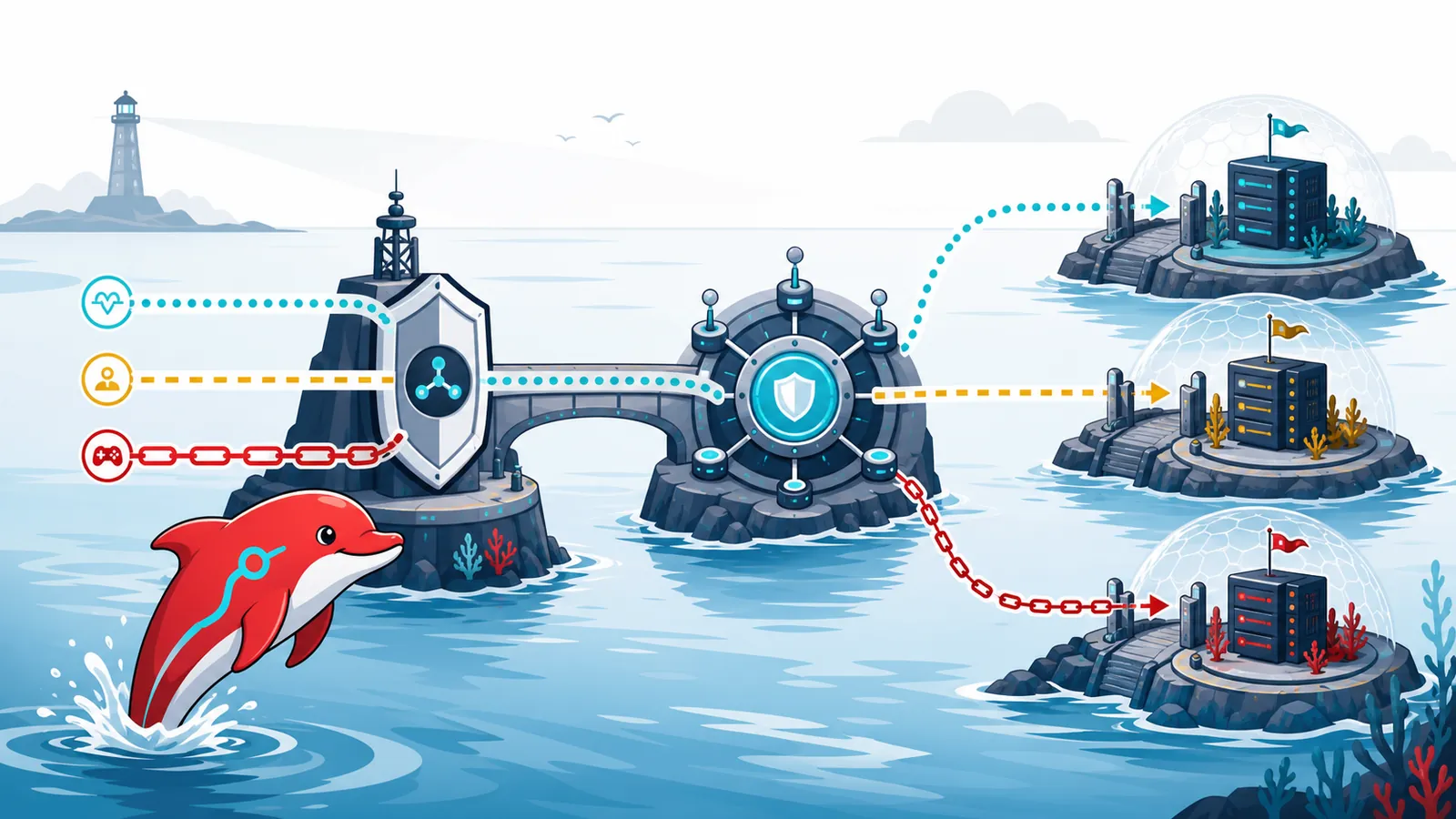
    Harbour Dolphin maps three distinct Java multiplayer traffic paths through a protected proxy hub to isolated backend server nodes.
    Separate status, login and play paths so controls reflect their different costs and user impact.

    PaperMC’s current Velocity security documentation strongly recommends a firewall for backend isolation. It also warns that Velocity modern forwarding is a second layer of protection, not a replacement for a firewall. Keep the proxy and backend software updated, restrict backend reachability and review plugins because application-level abuse can still consume server work after network traffic is accepted.

    Do not copy a universal join-rate or packet threshold from a blog. Establish a legitimate baseline, test player experience, change one control at a time and keep an emergency rollback. A protection provider should be able to explain whether it understands the game protocol or merely forwards a protected generic TCP stream.

    Valve-family server queries: challenge spoofing, then budget real sources

    Valve-family dedicated servers expose discovery information through A2S query types commonly known as A2S_INFO, A2S_PLAYER and A2S_RULES. These queries are useful to players and server browsers, but unauthenticated UDP responses can contribute to reflection risk when source addresses are spoofed. High query rates from real sources can also consume packet and protocol-processing capacity.

    Valve developer communication describes an A2S challenge exchange that lets a server ask a client to return a challenge before an information response, helping demonstrate that the requester can receive traffic at the claimed source. That can reduce spoofed reflection. It cannot prove that a real-source bot is benign, and it does not create infinite query capacity.
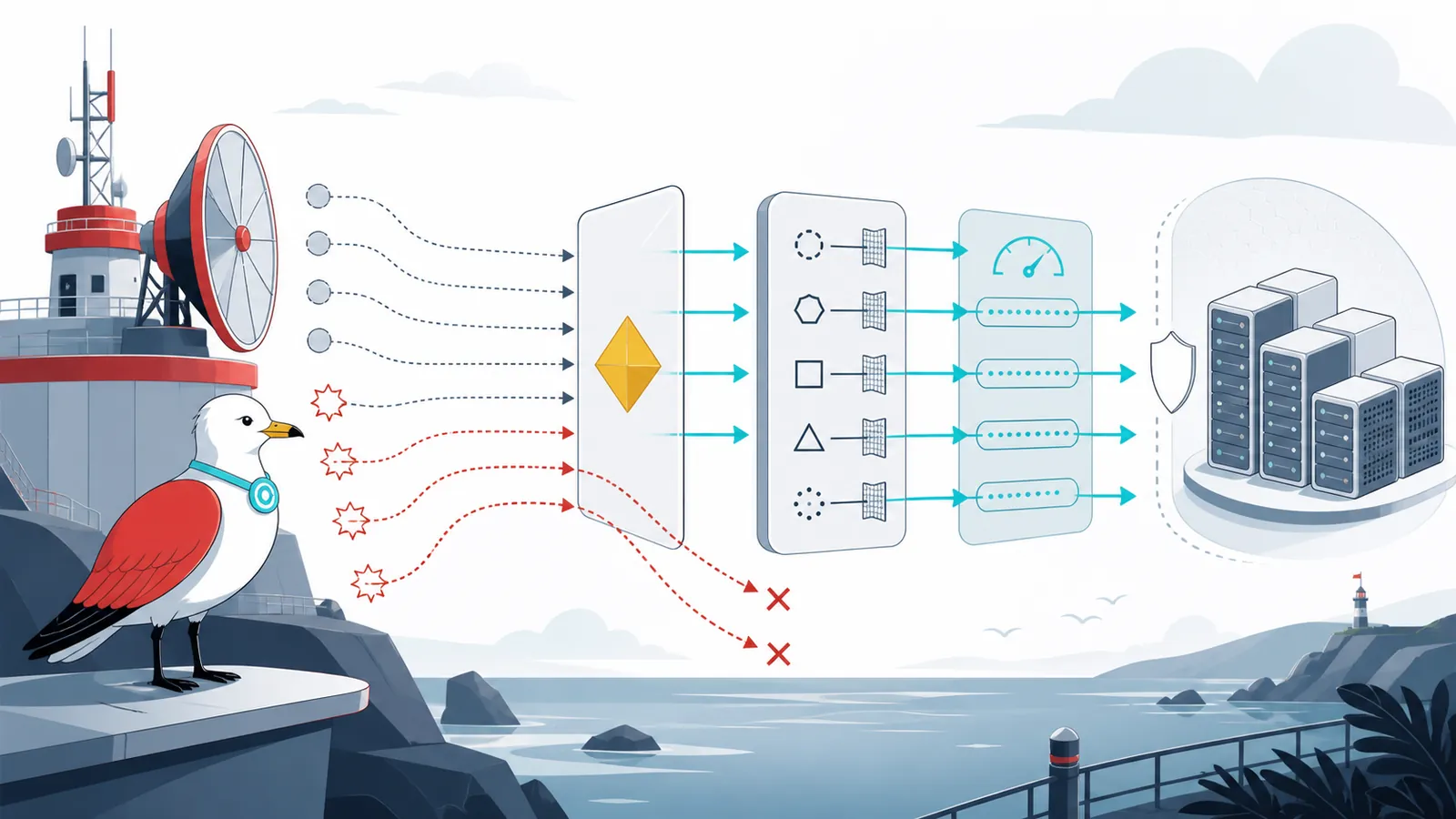
    Signal Gull observes geometric query challenges, protocol-aware filters and rate-controlled paths protecting a generic dedicated-server cluster.
    Challenge validation addresses spoofing; protocol-aware budgets and monitoring still matter for real-source query floods.
    • current server software and protocol support;
    • challenge validation where compatible;
    • protocol-aware filtering before expensive parsing;
    • separate budgets and observability for information, player and rules queries;
    • aggregate and source-aware controls that do not rely on one address threshold alone;
    • an incident mode that preserves the minimum discovery response needed for legitimate clients, if the game and provider support it.

    The Steamworks game-server overview explains the role of game-server discovery and connection. The challenge details above are based on a Valve developer-authored Steam Community announcement, not an RFC; compatibility and defaults can change, so verify them against the current game build and hosting provider.

    What to ask a DDoS provider

    • What clean and attack capacity is stated in Gbps and packets per second?
    • How are new connections, simultaneous state and protocol queries handled?
    • Which of our actual protocols are parsed, proxied or merely forwarded?
    • Is mitigation always on or triggered on demand, and what is the expected time to mitigate?
    • Where does clean traffic re-enter our network, and what latency or MTU changes should we expect?
    • What traffic and mitigation telemetry can we access during and after an event?
    • What is the escalation path, including after-hours response?
    • How are legitimate-traffic drops investigated and corrected?
    • Which features, traffic volumes, logs, support levels or data transfers add cost?
    • What happens if the origin address is exposed or attacked directly?

    OVHcloud’s Network Security Dashboard documentation is a useful example of provider-side visibility: it describes per-address events, attack-vector labels, bps/pps charts, clean and dropped traffic, and escalation data. Those fields describe one provider’s service, not a universal capability. Record what your selected provider actually offers.

    A compact incident and degradation runbook

    1. Declare and timestamp. Nominate an incident lead, start a record and preserve provider alerts and dashboards.
    2. Classify the bottleneck. Compare link utilisation, pps, new connections, concurrent state, request/query rates, latency, errors, queue depth and host saturation.
    3. Protect the management path. Keep administrative access separate where practical; avoid making emergency changes through the affected public service.
    4. Escalate upstream early. If the link or provider edge is the bottleneck, contact the network or mitigation provider with destination, protocol, time window, customer impact and evidence.
    5. Apply the smallest prepared control. Use reviewed edge rules, path budgets or protocol policies. Record the owner, timestamp and rollback.
    6. Degrade intentionally. Serve cached or static content, pause expensive routes, reduce optional query detail or limit new joins while preserving existing sessions where feasible.
    7. Watch legitimate traffic. Sample successful user journeys, geographic reachability, authentication and game-session health. Roll back a control that causes disproportionate harm.
    8. Recover and review. Remove temporary controls carefully, retain evidence according to policy, document false positives and update the capacity model.

    Monitoring signals worth keeping together

    • provider and interface bps/pps;
    • packet drops and NIC, virtual-switch or kernel saturation;
    • SYN rate, accepted connections, resets, timeouts and connection occupancy;
    • edge, cache and origin request rates plus cache-hit ratio;
    • application latency, error rate, worker saturation, queue depth and database pressure;
    • status, login, join, play and query-path health for game services;
    • clean-traffic delivery, mitigation start/stop times and false positives;
    • customer-impact signals such as successful page journeys or completed joins.

    Alerts should identify the suspected bottleneck and a human owner, not merely announce “high traffic”.

    Limits of this guide

    This is general educational information, not a guarantee, penetration-test instruction or substitute for provider engineering. It does not prescribe universal capacity, thresholds or packet filters. Service architecture, versions, jurisdiction, budget and acceptable user impact can change the correct design. Test controls in an authorised environment, maintain rollback and confirm contractual limits directly with suppliers.

    Plan the failure path before buying capacity

    DDoS resilience improves when owners can answer three questions: what resource fails first, who can act before that point, and what essential service remains during degradation? That model turns product names into testable requirements and makes incident decisions faster.

    If you need a bounded review of public exposure, dependencies, monitoring and recovery priorities, see Ozlin Info’s Cybersecurity Risk Advisory or contact us. Related reading: Incident Response and Disaster Recovery Planning and Home Broadband Server Hosting Risks in Australia.


    Sources and review note

    Material technical claims were checked on 31 August 2026 against the RFC Editor, Cloudflare documentation, PaperMC Velocity documentation, Steamworks documentation, a labelled Valve developer communication and OVHcloud documentation. Product behaviour and documentation can change; next scheduled review is 28 February 2027.

    AI disclosure: AI assisted with source discovery, drafting, copyediting and the original editorial illustrations; Ozlin Info reviewed the final article and remains responsible for publication.

    Source access date: 2026-08-29

    Limitations: DDoS controls, capacity, routes, protocol support, provider terms and application behaviour vary by environment and can change; validate the intended design with measured, authorised tests.
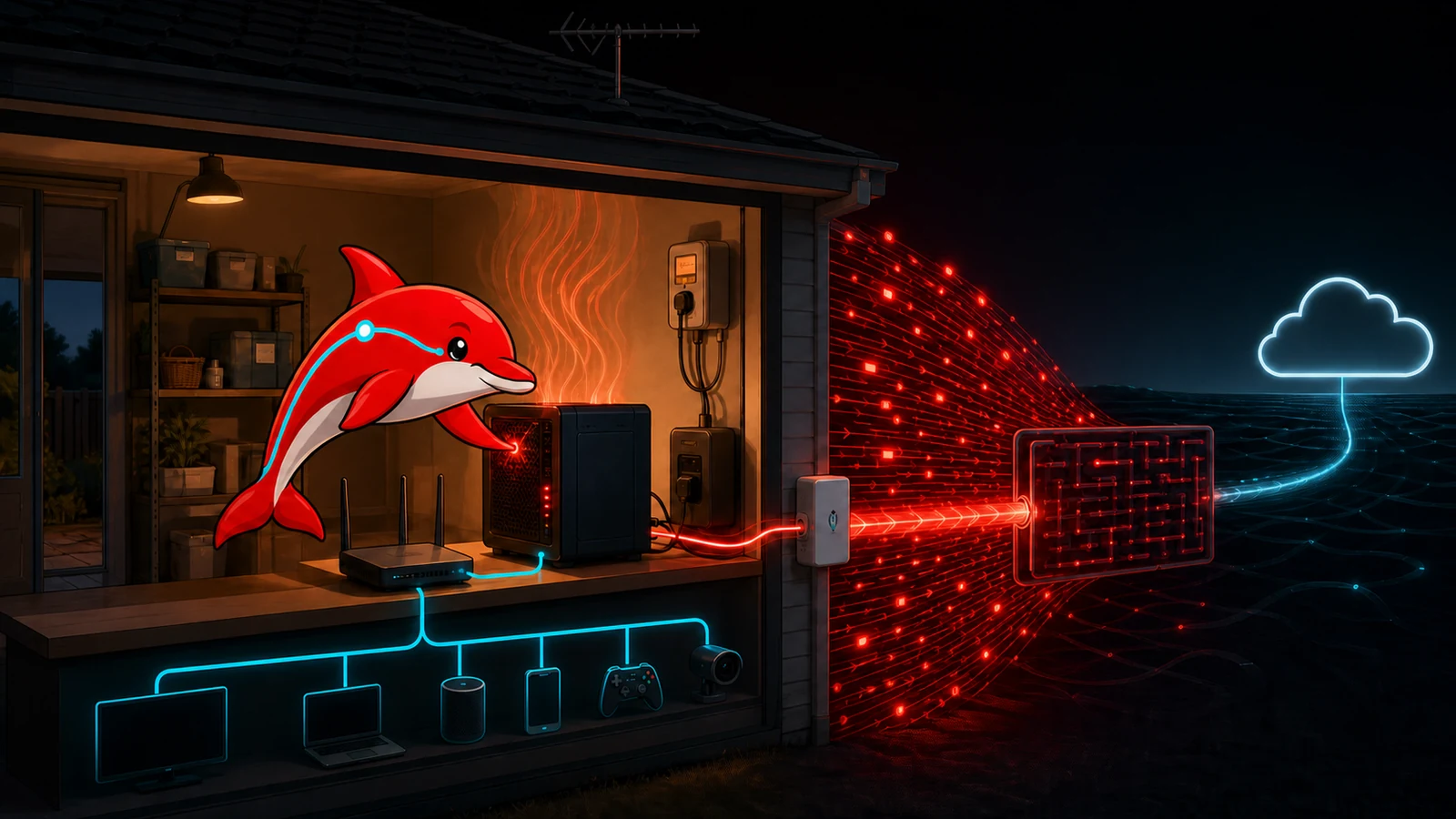
  • Why Hosting a Public Server on Home Broadband Is Usually a Bad Idea

    Why Hosting a Public Server on Home Broadband Is Usually a Bad Idea

    Running a server at home is excellent for learning. A small lab can teach Linux, containers, backups, monitoring and networking for less than a formal course. That does not automatically make a residential connection a sensible production platform for a public website, game service, file host or customer application.

    The problem is not that home hosting never works. It is that one inexpensive-looking computer inherits the limits of the house around it: consumer broadband, one power feed, domestic cooling, a shared router, changing addresses, household devices and an operator who also needs to sleep. A cloud VPS can fail too, but its network, power and replacement model are designed around hosted services. The honest comparison is total service risk, not “hardware already owned versus a monthly invoice.”

    This guide focuses on Australian residential broadband and uses public information checked on 29 August 2026. ISP addressing, plan speeds, acceptable-use rules and electricity prices change, so verify the current terms for the actual address before relying on any example.

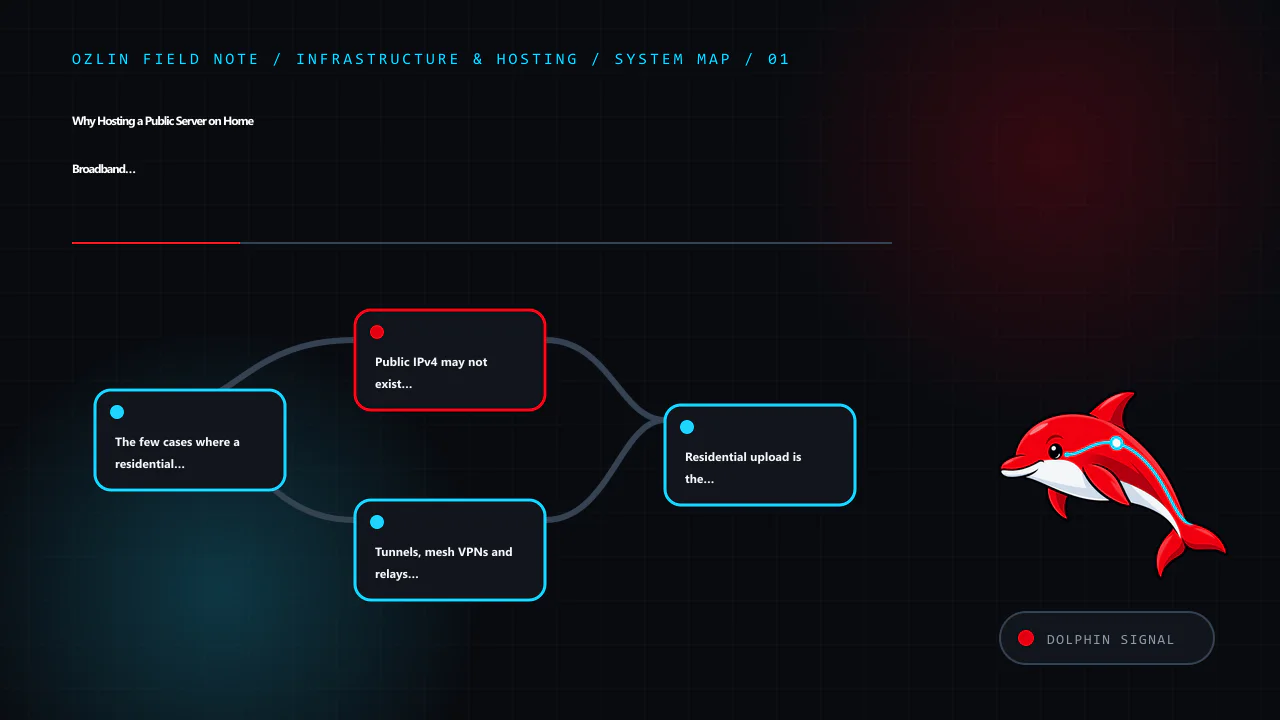
    Article map for Why Hosting a Public Server on Home Broadband Is Usually a Bad Idea, covering The few cases where a residential connection may be justifi…, Public IPv4 may not exist at your router, Tunnels, mesh VPNs an…
    Article map: The few cases where a residential connection may be justifi…; Public IPv4 may not exist at your router; Tunnels, mesh VPNs and relays solve different problems; Residential upload is the scarce direction.

    The few cases where a residential connection may be justified

    A home server can be reasonable when it is a non-critical lab, a private service reached through an authenticated overlay network, a local media or backup appliance, or a short-lived test with no customer dependency. It can also be useful for testing how a legitimate consumer service behaves from an ordinary residential network.

    Some streaming or registration platforms distinguish residential from data-centre addresses to manage licensing, fraud and abuse. That can create a genuine testing requirement, but it is not permission to evade geolocation, account, automation or anti-abuse rules. A public streaming site does not inherently need a residential IP. Check the platform contract, content rights and ISP acceptable-use policy; do not sell access to a household connection as a “clean residential proxy” or use it to disguise automated registrations.

    If the requirement is simply “customers must reach a reliable website,” residential identity is normally a disadvantage rather than a feature. Start with the Australia and New Zealand hosting guide and compare a VPS, dedicated server or colocation service first.

    Public IPv4 may not exist at your router

    Traditional port forwarding assumes the router owns a public IPv4 address. Many residential services instead use carrier-grade NAT, or CGNAT, where multiple subscribers share public IPv4 addresses and the ISP performs another translation outside the home. RFC 6598 defines a dedicated shared-address range for this purpose.

    Current Australian examples show why the ISP must be checked rather than assumed. Aussie Broadband says CGNAT is typically enabled by default and documents opt-out or static-IP paths. Superloop's residential Critical Information Summary dated 31 May 2025 says CGNAT is used where available, documents an opt-out path and lists one static IPv4 option at A$5 per month including GST. Those are provider-specific snapshots, not a promise that every ISP, access technology or future plan offers the same remedy; obtain the current CIS for the plan being purchased.

    Compare the router's WAN address with the address reported by an external service. A WAN address in private or shared space, or a different upstream address, suggests another NAT layer. Do not expose an administration page merely to test it.

    Dynamic DNS is not CGNAT traversal. DDNS updates an A or AAAA record when a routable address changes. Cloudflare's documentation describes monitoring the address and updating the DNS record through an API or client. If unsolicited packets cannot reach the subscriber through CGNAT, pointing a hostname at the shared address does not create a forwarding rule in the ISP's network.

    IPv6 can provide globally routable addresses without IPv4 NAT, but it does not remove the need for a stateful firewall. Confirm prefix stability, inbound filtering, client IPv6 support and a safe update process for dynamic AAAA records. Opening IPv6 while testing only IPv4 rules is a common way to create an unreviewed second exposure path.

    Tunnels, mesh VPNs and relays solve different problems

    An overlay product such as Radmin VPN or another mesh VPN can be useful for private access between enrolled devices. NAT traversal may establish a direct encrypted path; when that fails, a relay can add latency, throughput limits and an external dependency. This is suitable for administration or a small trusted group, not automatically for an anonymous public service.

    A reverse tunnel initiates an outbound connection from home to an edge provider. Cloudflare Tunnel, for example, documents outbound-only origin connections without opening an inbound router port. That reduces origin exposure and works behind CGNAT, but the connector, account, DNS, access policy and edge provider become part of the service. The origin still needs patches, least privilege and authentication. Protocol support and source-IP behaviour must be verified for the application.

    A VPS can also act as a WireGuard, TCP or application relay. Now both the home system and VPS must be patched, monitored and backed up; bandwidth crosses two links; client addresses may need explicit forwarding; and the relay bill may approach the price of hosting the workload there. Draw the complete data path before declaring tunnelling “free.”

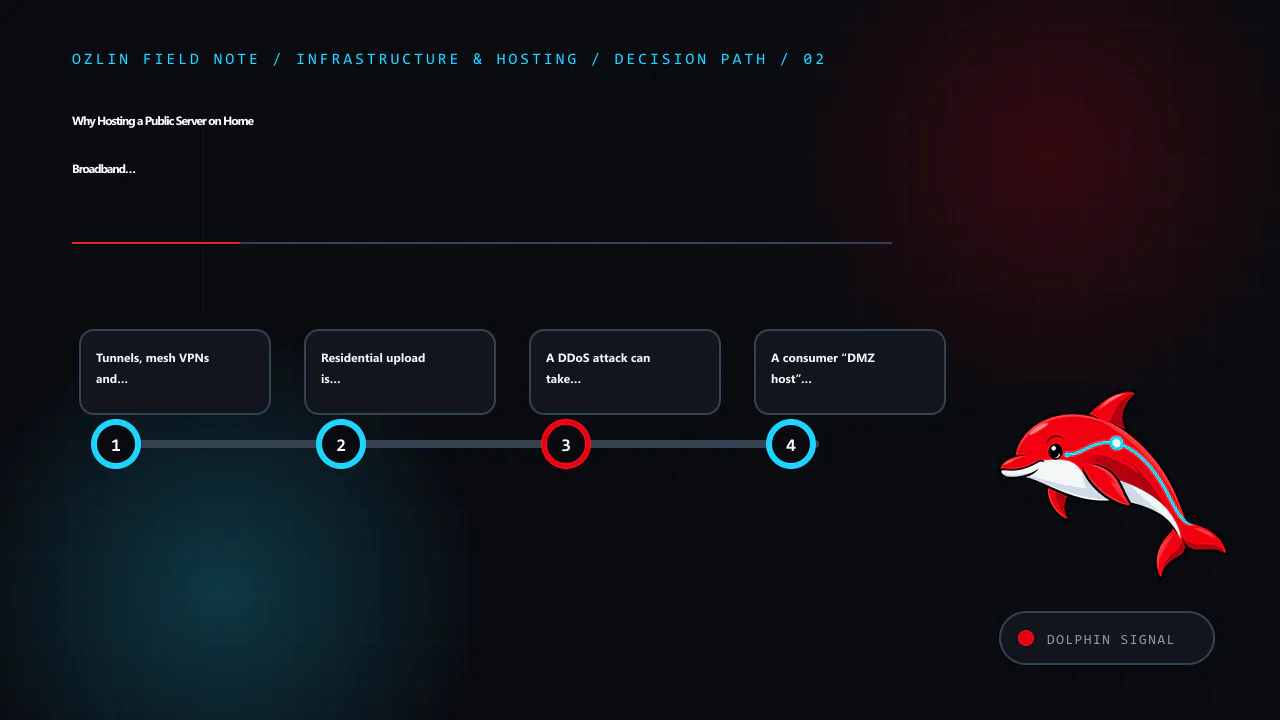
    Decision path for Why Hosting a Public Server on Home Broadband Is Usually a Bad Idea, covering Tunnels, mesh VPNs and relays solve different problems, Residential upload is the scarce direction, A DDoS attack can take…
    Decision path: Tunnels, mesh VPNs and relays solve different problems; Residential upload is the scarce direction; A DDoS attack can take the household offline; A consumer “DMZ host” is not network segmentation.

    Residential upload is the scarce direction

    Headline broadband speed usually emphasises download. A public server primarily sends data upstream. Concurrent game updates, video, backups and household video calls can contend for the same queue, increasing latency and packet loss before a monthly transfer total looks unusual.

    Measure wired sustained upload, p95 latency under load, jitter and packet loss at busy times. Test with the real application, not one speed-test burst. A 50 Mbps upstream cannot deliver 50 Mbps of dependable application traffic after protocol overhead, contention and the headroom needed by the household. Traffic shaping can improve fairness but cannot create upstream capacity.

    Ozlin has observed one 64-player CS2 zombie-escape environment peak around 150 Mbps outbound under its particular map and plugin mix. That does not define all game servers, but it demonstrates why a residential uplink can fail on instantaneous demand even when average monthly traffic seems manageable. The Australian game-server sizing guide explains how to measure this rather than size from slot count alone.

    A DDoS attack can take the household offline

    A local firewall can discard packets after they arrive. It cannot restore a residential access link whose upstream capacity has already been consumed. A volumetric attack against the public address may therefore disrupt work, calls, entertainment, cameras and every other household service—not just the intended server. Changing a dynamic IP may provide temporary relief, but DNS history, game listings or another direct protocol can reveal it again.

    ASD's denial-of-service guidance recommends planning with upstream providers, resilient capacity, monitoring, CDNs and cloud-based mitigation before an incident. A CDN can help an HTTP service when the origin address is concealed and origin firewall rules accept only authorised edge traffic. It does not automatically protect arbitrary UDP, game, voice, mail or remote-administration protocols, and a DNS-only record can reveal the same origin address.

    Ask the ISP what happens under attack: whether it offers mitigation, rate-limits or null-routes the address, how long recovery takes, and whether abuse traffic affects the account. If availability matters, this conversation should occur before publication.

    A consumer “DMZ host” is not network segmentation

    On many home routers, the setting labelled DMZ host or exposed host forwards essentially all otherwise-unmapped inbound TCP and UDP traffic to one internal device. TP-Link's current explanation explicitly distinguishes this from a true DMZ. It should not be used as a shortcut when the operator is unsure which ports are required.

    Even precise port forwarding increases attack surface. If the public server shares a flat LAN with laptops, phones, network storage, printers, smart TVs, cameras and home-automation devices, compromise can create a foothold behind the router. It does not make every device instantly public, but it places an attacker on a network that was probably designed for convenience and discovery rather than hostile east-west traffic.

    Use a real isolated VLAN or physical segment with default-deny rules between the server, management devices and household/IoT networks. Disable UPnP when automatic inbound mappings are unnecessary. Expose only the required service ports, keep router administration private, use a host firewall and supported software, and never install cracked or nulled panels, plugins or server packages. Unknown privileged code can convert the home server—and sometimes vulnerable routers or IoT devices—into part of someone else's botnet.

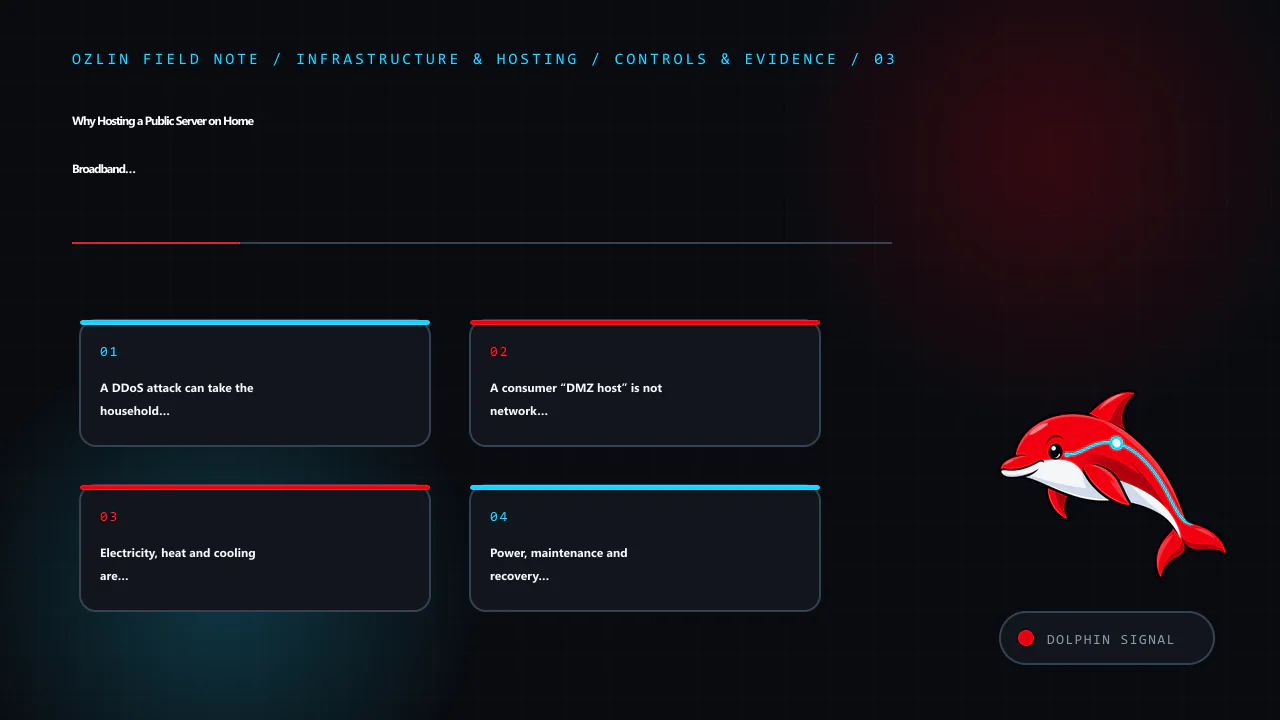
    Control and evidence map for Why Hosting a Public Server on Home Broadband Is Usually a Bad Idea, covering A DDoS attack can take the household offline, A consumer “DMZ host” is not network segmentation, Electricity, he…
    Control and evidence map: A DDoS attack can take the household offline; A consumer “DMZ host” is not network segmentation; Electricity, heat and cooling are recurring costs; Power, maintenance and recovery still need an owner.

    Electricity, heat and cooling are recurring costs

    An average load runs for 8,760 hours each year:

    annual kWh = average watts ÷ 1,000 × 8,760

    The AER's 2026–27 residential Default Market Offer flat usage caps for the three NSW distribution areas are 33.14–35.01 cents per kWh, including GST. They are safety-net tariff caps, not a prediction of any reader's bill; market offers, solar, time-of-use periods and location change the result.

    Average continuous load Annual energy Illustrative NSW electricity cost Excluded costs
    30 W mini PC 262.8 kWh A$87–A$92/year storage, UPS losses, cooling and broadband
    100 W compact server 876 kWh A$290–A$307/year same exclusions
    300 W rack server 2,628 kWh A$871–A$920/year same exclusions
    500 W server/GPU system 4,380 kWh A$1,452–A$1,533/year same exclusions

    Almost all consumed electricity becomes heat in the room. A garage or cupboard that is acceptable in winter may throttle disks, batteries and CPUs during a Sydney summer. Domestic air conditioning adds energy and another failure dependency. Measure inlet temperature, humidity, fan noise and power at the wall across seasons. Do not defeat server fan controls or electrical protections to make retired rack hardware tolerable beside a bedroom.

    Use this TCO rather than “the machine was free”:

    hardware + UPS + incremental electricity + cooling + public-IP/tunnel fees + replacement parts + off-site backup + administration and outage cost − residual value

    Power, maintenance and recovery still need an owner

    NBN states that mains-powered equipment connected to its network will not work during a power outage unless each required item has suitable backup. A UPS must cover the server, storage, router, access equipment and any tunnel dependency at the premises; runtime decreases as batteries age. It should trigger an orderly shutdown, not merely delay an uncontrolled one.

    Residential plans may not include business repair targets, proactive monitoring, redundant carriers or a service-level agreement. Firmware updates can reboot the router, a family member can unplug equipment, and a failed disk may wait until the operator returns home. Backups stored beside the server share theft, fire, flood and electrical risk. Maintain encrypted off-site backups and test restoration to different hardware.

    Operational minimums include patch windows, service and certificate monitoring, central logs, configuration backup, spare storage, a documented rebuild, remote access that does not expose management ports, and an out-of-band way to learn that the house is offline.

    If you still need a home-hosted service

    Proceed only when the consequence of failure is acceptable and the residential location is genuinely required. A defensible starting architecture is:

    1. confirm the ISP contract, public IPv4/IPv6 behaviour, static-address cost, upload capacity and abuse response;
    2. place the server on an isolated network with default-deny access to household and IoT devices;
    3. prefer an authenticated private overlay for administration and private services;
    4. for public HTTP, use an outbound tunnel or protected reverse proxy, hide and restrict the origin, and expose no router or server management UI;
    5. run supported software as a non-root service identity, minimise plugins, enable MFA where available and rotate scoped credentials;
    6. deploy UPS-backed graceful shutdown, temperature and availability alerts, rate limits and tested off-site recovery; and
    7. document a migration trigger—traffic, uptime, security, temperature or support load—at which the service moves to hosted infrastructure.

    For most public services, the cleaner design is a small VPS or protected dedicated server, with the home lab used for development and backups that do not contain the only copy. Colocation becomes attractive when owned hardware, power density and remote hands matter. Ozlin's infrastructure and hosting services can help compare the full path without publishing private network details.

    Home hosting is valuable as a laboratory. It becomes a poor bargain when customer availability, household safety or an irreplaceable residential connection is placed behind the same inexpensive router.

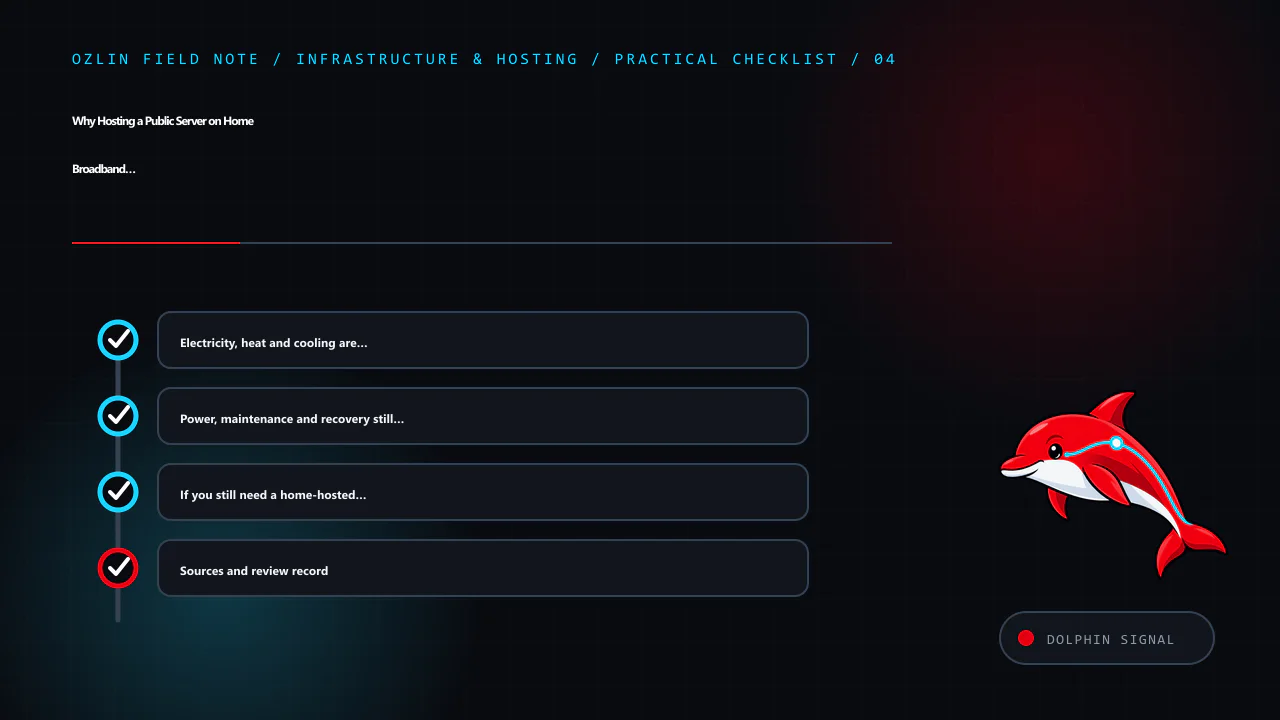
    Practical checklist for Why Hosting a Public Server on Home Broadband Is Usually a Bad Idea, covering Electricity, heat and cooling are recurring costs, Power, maintenance and recovery still need an owner, If you still…
    Practical checklist: Electricity, heat and cooling are recurring costs; Power, maintenance and recovery still need an owner; If you still need a home-hosted service; Sources and review record.

    Sources and review record

    Sources and prices were accessed on 29 August 2026. ISP addressing, tunnel behaviour and electricity figures are scheduled for review by 29 November 2026.

    AI assisted with source discovery, drafting and copyediting; Ozlin Info remains responsible for publication.